
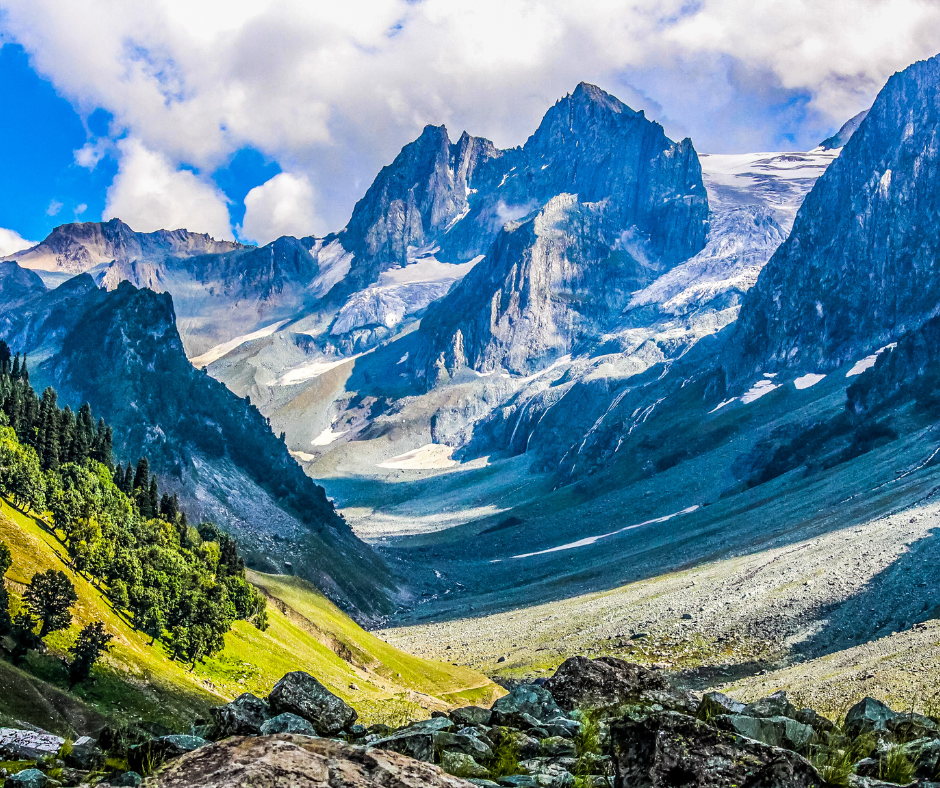
There are places you visit, and then there are places that stay with you forever. Kashmir belongs to the second kind. Long after the journey ends, its images return in quiet moments: mist rising from a lake at dawn, snow resting gently on pine branches, the hush of mountains that seem to listen. This is why Kashmir has never been described casually. For centuries, it has been called the Paradise on Earth, not as a metaphor, but as a recognition of something deeply real, deeply felt, and impossible to forget.
Kashmir is not just beautiful. It is emotionally overwhelming. From the moment one enters the valley, the air feels different, lighter yet heavier with meaning. Surrounded by the mighty Himalayas, Karakoram, and Pir Panjal ranges, Kashmir rests like a protected jewel, shaped by nature with deliberate care. Every river bend, every meadow, every season seems designed to remind humanity of what untouched harmony looks like.
A Landscape That Feels Like a Promise
The geography of Kashmir is poetry written in earth and water. Snow-capped mountains stand guard over vast green valleys. Rivers like the Jhelum do not rush; they glide, as if aware of the beauty they reflect. Lakes such as Dal and Wular are not just water bodies but living mirrors, capturing skies, houseboats, and centuries of stories.
Spring arrives with almond and cherry blossoms painting the valley in soft colors. Summer spreads lush meadows like Gulmarg and Pahalgam, where the grass feels unreal underfoot. Autumn turns the chinar trees into burning gold and red, a sight so powerful it stops conversations mid-sentence. Winter wraps Kashmir in silence and snow, transforming it into a white dream where time itself seems to slow down.
This constant transformation through seasons is one of the strongest reasons Kashmir is called paradise. It does not offer one kind of beauty. It offers every kind.
The Spiritual Calm That Words Fail to Capture
Kashmir’s beauty is not limited to what the eyes can see. There is a stillness here that reaches inward. Ancient sages, poets, and travelers have spoken of Kashmir as a place where the soul finds rest. The region has long been a center of spiritual thought, meditation, and reflection, giving rise to philosophies that emphasize inner peace and universal harmony.
Temples, mosques, shrines, and monasteries exist not in conflict but in quiet coexistence, reflecting a cultural fabric woven with tolerance and depth. This spiritual balance adds to the feeling that Kashmir is not just land, but a sanctuary.
Culture That Breathes Warmth and Humanity
Paradise is incomplete without people, and Kashmir’s people are its heartbeat. Known for their hospitality, resilience, and warmth, Kashmiris welcome guests not as tourists, but as honored visitors. A shared cup of traditional tea, a conversation by the fire, or a story told slowly becomes a memory that lasts longer than photographs.
The region’s art, from handwoven carpets and shawls to wood carving and papier-mâché, reflects patience and precision passed down through generations. Kashmiri cuisine, rich in flavor and tradition, is not merely food but an expression of identity, care, and celebration.
This human connection transforms natural beauty into emotional belonging. It is one thing to see paradise. It is another to feel part of it.
History, Poetry, and the Weight of Admiration
The phrase Paradise on Earth is not new. Emperors, travelers, and poets have echoed it across centuries. Mughal rulers, enchanted by the valley, built gardens that still bloom today, designed as reflections of heaven itself. Persian poets wrote verses that compared Kashmir to the divine. Travelers crossed mountains not for conquest, but for the chance to witness its splendor.
This uninterrupted admiration is powerful. When different eras, cultures, and voices arrive at the same conclusion, it demands attention. Kashmir did not earn its title through marketing or myth. It earned it through experience.
Why This Name Still Matters Today
In a world racing toward concrete, screens, and speed, Kashmir stands as a reminder of what humanity risks losing. It urges us to protect nature, honor culture, and slow down enough to feel wonder again. Calling Kashmir the Paradise on Earth is not only praise, it is a responsibility.
The urgency lies here. This paradise must be preserved, respected, and understood beyond headlines. To know Kashmir is to recognize the fragile balance between nature and humanity. To visit is to be changed. To ignore its value is to lose something irreplaceable.
Kashmir Is Not Just a Place, It Is a Feeling
Kashmir is called the Paradise on Earth because it awakens something ancient within us. A longing for beauty without excess. A desire for peace without isolation. A connection to land, people, and spirit that feels complete.
Paradise is not perfection. Paradise is harmony. And Kashmir, in all its colors, silences, and stories, is harmony made visible.